Halabja Monument & Peace Museum
Halabja
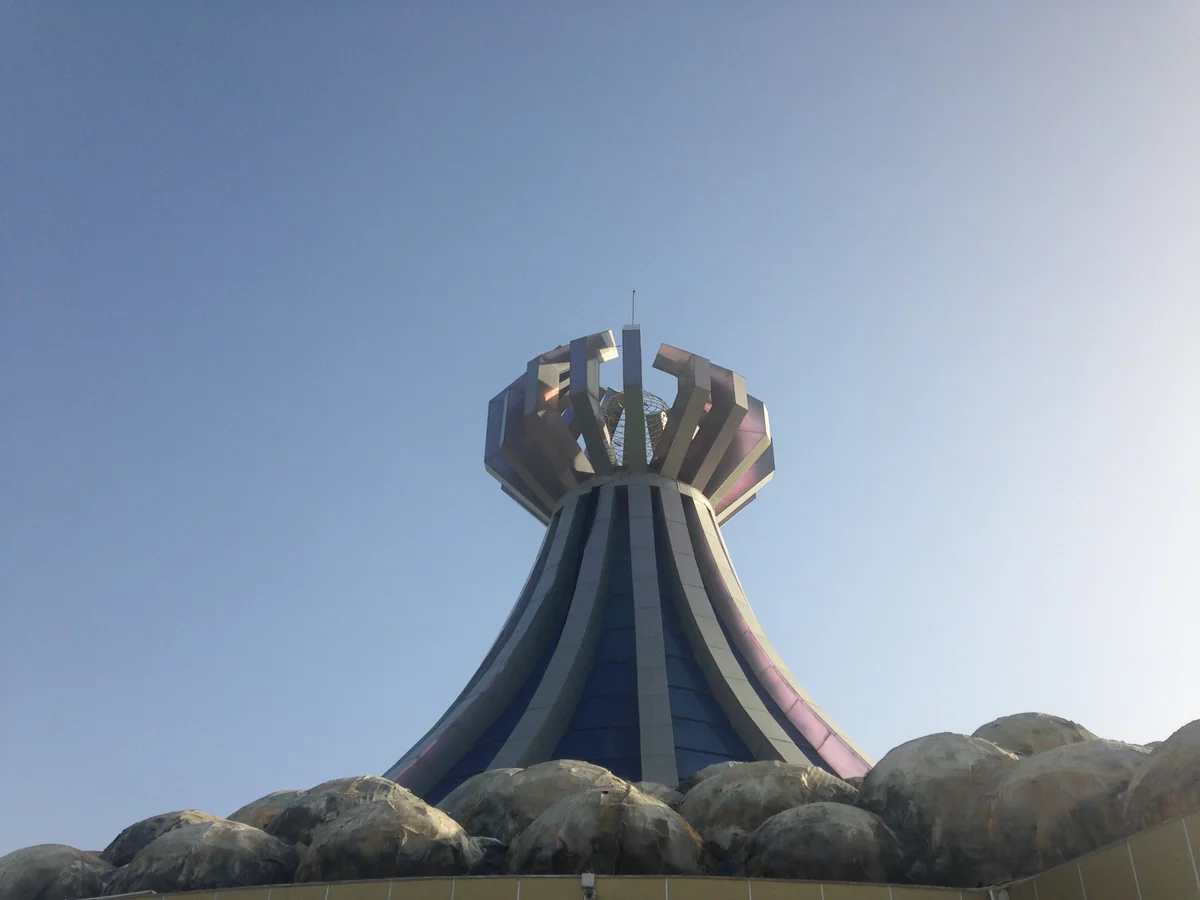
The memorial to the victims of the 16 March 1988 chemical attack on Halabja, dedicated in September 2003.
About
The monument keeps alive the memory of the victims of the 16 March 1988 chemical attack on Halabja, which killed an estimated 3,200–5,000 people and injured thousands more — the largest chemical weapons attack ever directed against a civilian-populated area. Dedicated on 15 September 2003, it was damaged during protests in 2006 and later rebuilt as a peace museum. Its halls preserve the victims' names, photographs and belongings from that day.
Building and opening the monument
The Halabja memorial monument was built between 2002 and 2003 and formally opened on 15 September 2003, six months after the fall of Saddam Hussein's government; then-U.S. Secretary of State Colin Powell attended the opening ceremony. Since that year, the site has been the main venue for the annual commemoration on 16 March, the anniversary of the chemical attack.
The building's architecture and what the museum holds
From a distance, the building is recognisable by a tall, tapering conical tower that rises out of a rounded, stone-textured mound, crowned with a sharp, branch-like sculptural form reminiscent of a crown or a flame. Inside, a wall of black glass panels engraves the names of thousands of victims in Kurdish script, reflected across the main hall. The museum also holds photographs, artwork by Kurdish artists, poems and objects that survived that day — including a bomb casing displayed in the entrance hall as a symbolic flower pot. Part of the exhibition space also uses life-sized figures to recreate scenes from the attack's aftermath — a section many visitors describe as the hardest part of the visit.
The 16 March 2006 protest and fire
On 16 March 2006, the 18th anniversary of the attack, roughly two thousand Halabja residents — many of them schoolchildren and students — marched on the monument to protest poor living conditions and what they saw as Kurdish leaders' neglect of survivors. The protest turned violent: security forces opened fire on the crowd, killing 17-year-old Kurda Ahmed and wounding several others. Protesters set the museum building on fire, destroying much of its archive. The monument was rebuilt in the years that followed and reopened as the Halabja Monument and Peace Museum. In 2025, the Kurdistan Region's Council of Ministers approved a budget to renovate and further expand it — including a new auditorium and a new monument on 47 dunams of land.
Background: the 16 March 1988 chemical attack
On the morning of 16 March 1988, in the closing days of the Iran-Iraq War and two days after Iranian forces captured Halabja in Operation Zafar 7, Iraqi warplanes struck the town with chemical bombs. A mixture of mustard gas and the nerve agents tabun, sarin and VX rained down on residential areas; survivors have described the smell as similar to sweet apples. Estimates vary, but between 3,200 and 5,000 people died within hours, and a further 7,000 to 10,000 were injured or left with long-term physical and psychological effects. The attack is the best-known event of the Anfal campaign — the Iraqi Ba'athist government's wider military campaign against Iraq's Kurds — and was carried out under the command of Ali Hassan al-Majid, Saddam Hussein's cousin, who became known as 'Chemical Ali'. In 2010, the Supreme Iraqi Criminal Tribunal formally recognised the attack as an act of genocide against the Kurdish people and executed al-Majid the same year; Canada's House of Commons also recognised it as genocide in 2010.
Geography and visiting
Halabja sits on the slopes of the Zagros range, close to the Iranian border. Since 2014 it has been recognised as the fourth governorate of the Kurdistan Region of Iraq — split off from Sulaymaniyah Governorate — though formal approval of that status by the Iraqi parliament took until 2025. The monument stands at the entrance to the town and, especially on 16 March each year, hosts both official and public commemoration ceremonies. No official source publishes fixed visiting hours or an entrance fee for the museum; travellers who want to visit should check the current situation with a local tourism office or a local guide before making the trip.
Photo gallery
Watch
Frequently asked questions
- When was the Halabja monument built and opened?
- It was built between 2002 and 2003 and formally opened on 15 September 2003; then-U.S. Secretary of State Colin Powell attended the opening ceremony.
- What happened to the monument in 2006?
- On 16 March 2006, local protesters angry over poor living conditions set the museum building on fire; during clashes with security forces a 17-year-old was killed and much of the museum's archive was destroyed. The monument was rebuilt in the following years and reopened as the Halabja Monument and Peace Museum.
- What is displayed inside the museum?
- A wall of black glass panels engraved with the names of thousands of victims in Kurdish script, photographs and artwork by Kurdish artists, poems, and objects that survived that day — including a bomb casing displayed as a symbolic flower pot. Part of the exhibition also uses life-sized figures to recreate scenes from the attack's aftermath.
- When exactly did the Halabja chemical attack happen, and how many people died?
- The attack took place on 16 March 1988. Estimates vary, but between 3,200 and 5,000 people died within hours, and a further 7,000 to 10,000 were injured or left with long-term effects — making it the largest chemical weapons attack in history against a civilian-populated area.
- Has the Halabja attack been formally recognised as genocide?
- Yes. In 2010 the Supreme Iraqi Criminal Tribunal formally declared the attack an act of genocide against the Kurdish people and executed Ali Hassan al-Majid ('Chemical Ali'), the operation's commander, the same year. Canada's House of Commons also recognised the event as genocide in 2010.
Sources for this profile
- https://en.wikipedia.org/wiki/Halabja_massacre
- https://www.globalsecurity.org/wmd/library/news/iraq/2003/09/iraq-030915-usia01.htm
- https://en.wikipedia.org/wiki/Halabja_Martyrs_Monument
- https://en.wikipedia.org/wiki/Halabja_Governorate
- https://www.aljazeera.com/news/2006/3/16/kurds-protest-in-halabja
- https://www.youtube.com/watch?v=rFmpeR9OXFM